The Nile on
Hands-On Accelerator Physics Using MATLAB by Volker Ziemann
Hands-On Accelerator Physics Using MATLAB(R), second edition provides a broad introduction into the physics and the technology of particle accelerators from synchrotron light sources to high-energy colliders.
FORMAT
Hardcover CONDITION
Brand New Publisher Description
Hands-On Accelerator Physics Using MATLAB®, Second Edition, provides a broad introduction into the physics and the technology of particle accelerators from synchrotron light sources to high-energy colliders. It covers the design of beam optics, magnets, and radio-frequency systems, followed by a discussion of beam instrumentation and correction algorithms. Later chapters deal with the interaction of beams with targets, the emission of synchrotron radiation, and intensity limitations. Chapters discussing running and future accelerators round up the presentation. Theoretical concepts and the design of key components are explained with the help of MATLAB code. Practical topics, such as beam size measurements, magnet construction and measurements, and radio-frequency measurements are explored in student labs that do not require access to an accelerator. This unique approach provides a look at what goes on "under the hood" inside modern accelerators and presents readers with the tools to perform their independent investigations on the computer or in student labs. This book will be of interest to graduate students, post-graduate researchers studying accelerator physics, as well as engineers entering the second edition features a new chapter on future accelerators and several new sections on polarization, neutrino beams, testing of superconducting cavities, and matching in longitudinal phase space, among MATLAB code was updated to be consistent with the recent release of R2024a. All code is available from the book's GitHub site at Key features:
- Provides a broad introduction into physics of particle accelerators from synchrotron light sources to high-energy colliders.
- Discusses technical subsystems, including magnets, radio-frequency engineering, instrumentation and diagnostics, correction of imperfections, control, vacuum, and cryogenics.
- Illustrates key concepts with sample code in MATLAB.
Table of Contents
Chapter 1: Introduction and History. Chapter 2: Reference System. Chapter 3: Transverse Beam Optics. Chapter 4: Magnets. Chapter 5: Longitudinal Dynamics and Acceleration. Chapter 6: Radio-Frequency Systems. Chapter 7: Instrumentation and Diagnostics. Chapter 8: Imperfections and Their Correction. Chapter 9: Targets and Luminosity. Chapter 10: Synchrotron Radiation and Free-Electron Lasers. Chapter 11: Non-linear Dynamics. Chapter 12: Collective Effects. Chapter 13: Accelerator Subsystems. Chapter 14: Examples of Accelerators. Chapter 15: Future Accelerators. Appendix A: The Student Labs. Appendix B: Appendices Available Online. Bibliography. Index.
Review
What I love about this book is the ease with which it introduces the reader to the complex art of accelerator design. In a friendly, conversational tone that invites you to read on, the book not only teaches the basics of accelerator physics, but also introduces us to more advanced topics such as nonlinear beam dynamics, various instabilities, and sophisticated methods such as Lie algebra and Hamiliton formalism. The well-designed and well-placed MATLAB exercises help with understanding and internalisation, and provide a virtual 'control room' experience. It is also noteworthy that no aspect of a real accelerator is neglected, be it dosimetry, the vacuum system or the building. Its comprehensive approach makes the book a highly recommended resource for aspiring accelerator physicists.- Atoosa Meseck, Professor of Accelerator Physics, University of Mainz, March 2025Volker Ziemann's Hands-On Accelerator Physics Using MATLAB® stands out for the book's ability to connect foundational physics with hands-on computational tools in a seamless and pedagogically powerful manner. Ziemann succeeds not only in demystifying abstract concepts but also in empowering the reader to experiment, tweak, and internalize the physics through immediate response. This is more than a textbook—it is a dynamic laboratory in the authors of Unifying Physics of Accelerators, Lasers, and Plasma, I am especially appreciative of Ziemann's inventive approach that resonates with the unifying mindset I advocate—bridging theory,sapplication, and intuition. This book doesn't merely teach accelerator physics; it invites the reader to play with it, to explore its underlying principles through code and computation. In doing so, it fosters the kind of creative problem-solving that is essential not only in accelerator physics but across the broader landscape of modern physics and recommended for students, educators, and professionals who value clarity, creativity, and computational insight.- Andrei Seryi and Elena Seraia, Jefferson Laboratory, April 2025
Details ISBN1032726962 Author Volker Ziemann Publisher Taylor & Francis Ltd Edition Description 2nd edition Year 2025 Edition 2nd ISBN-10 1032726962 ISBN-13 9781032726960 Format Hardcover Imprint CRC Press Place of Publication London Country of Publication United Kingdom Replaces 9781138589940 Illustrations 161 Line drawings, black and white; 19 Halftones, black and white; 180 Illustrations, black and white Audience Tertiary & Higher Education Publication Date 2025-03-31 UK Release Date 2025-03-31 Pages 398 DEWEY 539.730285536 Country of Origin GB Product Class Description Physics Alternative 9781032732497
We\'ve got this
At The Nile, if you\'re looking for it, we\'ve got it.
With fast shipping, low prices, friendly service and well over a million items - you\'re bound to find what you want, at a price you\'ll love!
TheNile_Item_ID:176544229;
When you click on links to various merchants on this site and make a purchase, this can result in this site earning a commission. Affiliate programs and affiliations include, but are not limited to, the eBay Partner Network.

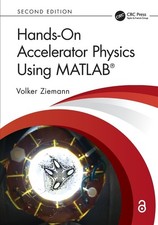 Hands-On Accelerator Physics Using MATLAB(R) Paperback by Volker Ziemann$88.95
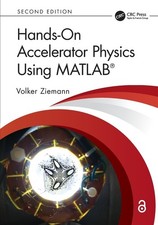 Hands-On Accelerator Physics Using MATLAB(R) Paperback by Volker Ziemann$88.95
 1760mW 660nm 810nm 980nm Cold Laser Therapy for Carpal Tunnel Tennis Elbow Pain$259.16
 Hands-On Accelerator Physics Using Matlab(R)$197.72
 Hands-On Accelerator Physics Using MATLAB by Volker Ziemann Paperback Book$58.88
 Hands-On Accelerator Physics Using MATLAB by Volker Ziemann Paperback Book$122.28
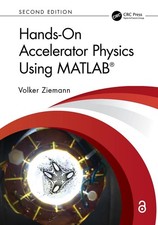 Hands-On Accelerator Physics Using MATLAB by Volker Ziemann Hardcover Book$162.68
 15W Laser Therapy Machine 980nm High Power Physical Therapy Device for Pain$2,650.77
 www.userbars.org














