|
>> If you dont know how to design a userbar, then write here a Userbar that you want.
>> If you know how to design them help these people and design what they request.
|
 |
|
USERBARS.org | Free Forum Userbars
| On eBay now |

Balancing Risks : Great Power Intervention in the Periphery, Hardcover by Tal...
$87.73

Balancing Risks : Great Power Intervention in the Periphery, Hardcover by Taliaferro, Jeffrey W., ISBN 0801442214, ISBN-13 9780801442216, Like New Used, Free shipping in the US<p>Great powers often initiate risky military and diplomatic inventions in far-off, peripheral regions that pose no direct threat to them, risking direct confrontation with rivals in strategically inconsequential places. Why do powerful countries behave in a way that leads to entrapment in prolonged, expensive, and self-defeating conflicts? Jeffrey W. Taliaferro suggests that such interventions are driven by the refusal of senior officials to accept losses in their state's relative power, international status, or prestige. Instead of cutting their losses, leaders often continue to invest blood and money in failed excursions into the periphery. Their policies may seem to be driven by rational concerns about power and security, but Taliaferro deems them to be at odds with the master explanation of political realism. Taliaferro constructs a "balance-of-risk" theory of foreign policy that draws on defensive realism (in international relations) and prospect theory (in psychology). He illustrates the power of this new theory in several case narratives: Germany's initiation and escalation of the 1905 and 1911 Moroccan crises, the United States' involvement in the Korean War in 1950–52, and Japan's entanglement in the second Sino-Japanese war in 1937–40 and its decisions for war with the . in 1940–41.</p> <p>Great powers often initiate risky military and diplomatic inventions in far-off, peripheral regions that pose no direct threat to them, risking direct confrontation with rivals in strategically inconsequential places. Why do powerful countries behave in a way that leads to entrapment in prolonged, expensive, and self-defeating conflicts?</p><p>Jeffrey W. Taliaferro suggests that such interventions are driven by the refusal of senior officials to accept losses in their state's relative power, international status, or prestige. Instead of cutting their losses, leaders often continue to invest blood and money in failed excursions into the periphery. Their policies may seem to be driven by rational concerns about power and security, but Taliaferro deems them to be at odds with the master explanation of political realism.</p><p>Taliaferro constructs a "balance-of-risk" theory of foreign policy that draws on defensive realism (in international relations) and prospect theory (in psychology). He illustrates the power of this new theory in several case narratives: Germany's initiation and escalation of the 1905 and 1911 Moroccan crises, the United States' involvement in the Korean War in 1950–52, and Japan's entanglement in the second Sino-Japanese war in 1937–40 and its decisions for war with the . in 1940–41.</p>
When you click on links to various merchants on this site and make a purchase, this can result in this site earning a commission. Affiliate programs and affiliations include, but are not limited to, the eBay Partner Network.
|
|
|
|
|
|

 Balancing Risks: Great Power Interv..., Jeffrey W Talia$32.74
 BALANCING RISKS: GREAT POWER INTERVENTION IN THE PERIPHERY By Jeffrey W.$32.75
 Balancing Risks : Great Power Intervention in the Periphery, Hardcover by Tal...$87.73
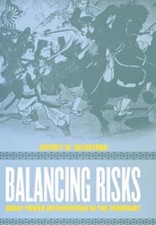 Balancing Risks: Great Power Intervention In The Periphery$87.75
 Balancing Risks: Great Power Interv..., Jeffrey W Talia$32.99
 William B. Rous Health and Well-Being Risks for Organizations and Pe (Paperback)$74.00
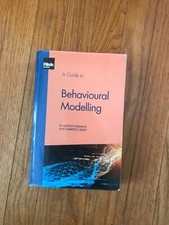 A Guide to Behavioral Modelling by Risk Books - Laminated soft cover$100.00












